
A small fall can leave a noticeable change in your child’s smile. Once the tears settle, you may spot a missing corner on a baby tooth and wonder whether it matters if the tooth will eventually fall out.
It does matter enough to ask for dental advice. A small chip may be straightforward to manage, but the size of the missing piece does not reveal everything about the injury.
For parents looking for a kids dentist in North Bay, the immediate priorities are to check the child, avoid further injury and contact a dental office. Northern Lakes Dental can advise you on arranging an assessment and what information to provide.
Why a small chip in a baby tooth still needs advice
Baby teeth help children eat and speak, and their condition matters while the adult teeth develop. An injury deserves attention even when it affects a tooth that is not permanent.
The visible chip may be only one part of what happened. A dentist may need to check whether the tooth has moved, whether nearby teeth or soft tissues were injured and whether your child can bite comfortably.
SickKids’ guidance on tooth injuries recommends seeing a dentist for a minor chip or a tooth loosened by injury. It also distinguishes injuries to baby teeth from injuries to permanent teeth.
If you are unsure which kind of tooth is involved, tell the office. Do not assume that every tooth in a young child’s mouth is a baby tooth.
A calm child and a small chip are reassuring observations, but they do not replace an assessment. You do not have to decide how serious the injury is before calling.
What to do immediately after the injury
First, check your child’s overall condition. A fall may involve more than a tooth, particularly if there was a blow to the head or face.
If your child is otherwise well, gently look at the mouth without pulling on the injured tooth. Use a clean cloth or gauze with gentle pressure for minor bleeding, and supervise closely. A cold compress held against the outside of the face may help with swelling.
If you find the chipped piece, place it in a clean container and bring it to the appointment. Do not put a fragment or tooth inside a young child’s mouth for storage because it could be swallowed or inhaled.
Avoid trying to smooth the tooth yourself, glue a piece back on or push a displaced tooth into position. Ask the dental team what to do next.
When you call, share your child’s age, when and how the injury happened, whether the tooth is loose or displaced and whether there is ongoing bleeding or pain. If the office asks for a photograph, take it only if you can do so without upsetting the child or manipulating the injury.
When to seek urgent dental or medical care
Seek urgent dental advice for a tooth that has moved, become very loose, broken significantly or caused persistent pain. Difficulty closing the mouth normally also needs to be reported.
A completely knocked-out baby tooth must not be put back in its socket. Contact a dentist promptly for advice and assessment. If you are unsure whether the tooth is baby or permanent, say that immediately because the management differs.
The BC Dental Association’s dental emergency guidance explains why injuries and symptoms such as uncontrolled bleeding or severe swelling need urgent attention.
Seek emergency medical help for breathing difficulty, uncontrolled bleeding, a serious facial injury or concerning symptoms after a head injury. Do not let the visible tooth chip distract from a child who is unusually drowsy, loses consciousness or seems seriously unwell.
For a smaller injury without those warning signs, call the dental office and follow its advice about timing. “It is only a baby tooth” is not a reason to ignore a new injury.
What the dentist may check
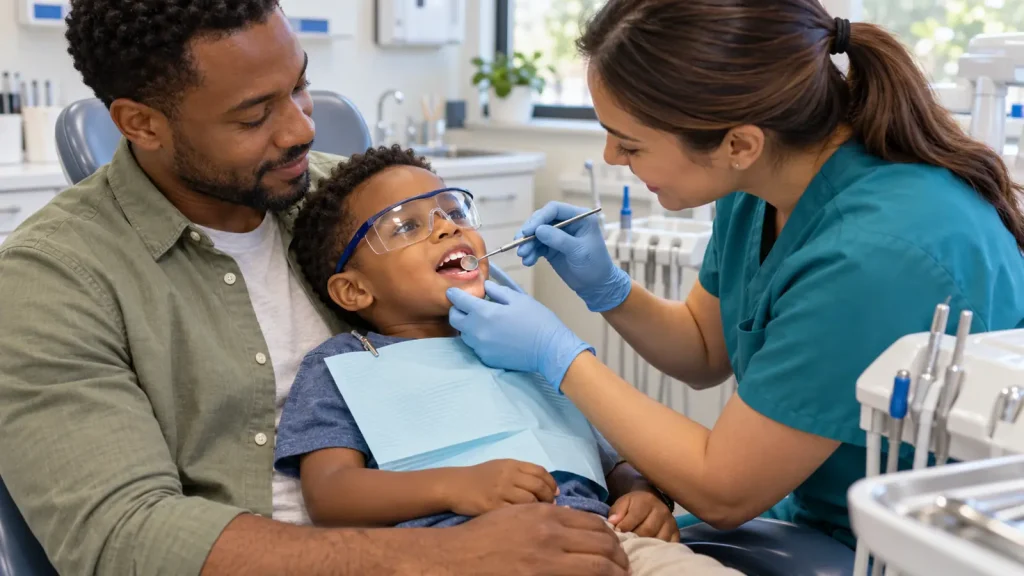
The appointment is about the whole injury, not just making the tooth look smooth again. The dentist may examine the damaged tooth, neighbouring teeth, gums and lips, and check how the child’s teeth meet.
Imaging may be considered when it would help the assessment. The dentist will also want to know about any previous injury to the same area.
Treatment depends on what is found. Some injuries may need a small repair or monitoring, while others require a different approach. A parent cannot reliably choose between those options from the appearance of the chip.
Ask what the dentist has found and what it means for your child’s eating, cleaning and follow-up. If no immediate repair is recommended, clarify what monitoring involves rather than assuming there is nothing further to do.
Northern Lakes Dental’s treatment information can help you get familiar with the practice before your visit. When booking, make clear that the concern is an injury so the team can direct the appointment appropriately.
What to watch for after the first visit
Follow the instructions given for the specific tooth. Ask how to clean around it, which foods to avoid temporarily and whether a review visit is needed.
Watch for changes such as new pain, swelling, a bump on the gum, increasing looseness or a change in tooth colour. A child may also show discomfort by avoiding food on one side or becoming reluctant to brush.
Report changes to the dentist rather than trying to interpret them yourself. A colour change, for example, needs context and does not by itself tell you what treatment is required.
Keep any recommended follow-up even if your child seems comfortable. If you are uncertain which changes warrant an earlier call, ask for that information before leaving the appointment.
Questions to Ask at Your Appointment
Useful questions include:
- Is this definitely a baby tooth?
- Was anything besides the visible edge injured?
- Does the tooth need treatment now or monitoring?
- How should we clean around the injury?
- What should my child avoid while it settles?
- Which changes should prompt another call?
- When should the tooth be checked again?
You can also ask how to explain the plan to your child in simple terms. Clear instructions make it easier for everyone at home to respond consistently.
Frequently Asked Questions
Yes, contact a dentist for advice and an assessment. The visible size of a chip does not show whether there are other effects from the injury.
Still report the injury. Lack of pain is helpful information, but it does not confirm that the tooth and surrounding tissues are unaffected.
Some injuries to baby teeth can affect developing permanent teeth. The dentist will consider the type and extent of the injury rather than assuming every chip has the same risk.
Do not reinsert it. Contact a dentist promptly, and bring the tooth in a container if you have it. Never store it in a young child’s mouth.
Contact the dental office and describe when the change appeared and any other symptoms. The dentist can decide whether the tooth needs to be reviewed sooner.
Talk to Northern Lakes Dental
A quick call can help you decide what to do after a chipped baby tooth. Contact Northern Lakes Dental in North Bay, explain the injury and ask about an assessment and follow-up for your child.