
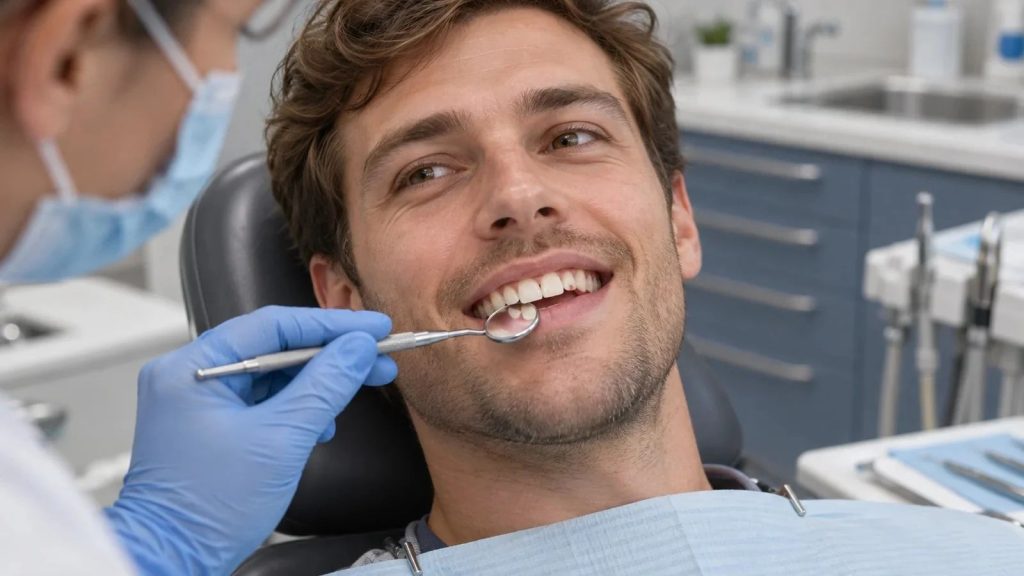
A broken tooth needs assessment even if it feels completely comfortable. Contact a dental office, describe what happened and ask how soon it should be checked. Pain does not reliably show the size, depth or location of the damage, and the part you can see may not tell the whole story.
Until you have advice from an emergency dentist, avoid chewing on the tooth and do not file or glue it. Keep a broken piece if you can retrieve it safely, and ask the office how to store it for the appointment.
Northern Lakes Dental provides emergency dental care in North Bay. You do not need to wait for a toothache before asking its team about a new break.
Why a broken tooth may not hurt
Teeth have a hard outer structure and softer tissue inside. A break can affect different parts of that structure, so not every fracture causes the same symptoms. Some damage produces little discomfort, while other damage hurts when biting or with changes in temperature.
The American Association of Endodontists’ explanation of cracked teeth describes several patterns, including fractures that may cause little pain. It also explains that treatment depends on the type, location and extent of the damage. You cannot reliably sort yourself into one of those categories by looking at the missing piece.
Comfort is therefore useful information to report, but it is not a diagnosis. “It broke yesterday and has not hurt” tells the dentist something different from “it hurt for a week and then stopped.” Share the sequence rather than shortening both stories to “no pain.”
A small visible chip also does not tell you whether there are other findings beneath or beside it. The practical response is to have the area assessed, not to assume either that the tooth is fine or that it needs extensive treatment. Both conclusions would get ahead of the examination.
What details to report when you call
Tell the team where the tooth is and when you noticed the break. Explain whether you felt it happen while eating, saw it after an injury or simply discovered a rough edge. If you do not know when it happened, say that rather than trying to guess.
Mention whether the tooth has a large filling, a crown or previous root canal treatment, if you know. Also describe any recent dental work in the area. Those details can help the office understand the situation before the examination.
Useful observations include:
- Whether a piece is missing or still seems attached.
- Whether the tooth feels loose or your bite feels different.
- Whether an edge catches your tongue or cheek.
- Whether food collects in a new space.
- Whether there was earlier pain, sensitivity or swelling, even if it has settled.
- Whether the break followed a fall, collision or blow to the mouth.
Northern Lakes Dental’s guide to when to contact a dentist about a broken tooth covers urgent dental concerns more broadly. For a painless break, make the absence of pain clear without presenting it as proof that the problem can wait.
Ask when you should be seen and what to do if something changes. If you already have a checkup booked, give the date and ask whether it is appropriate to wait until then. Do not assume a future routine appointment is soon enough without discussing the new damage.
Symptoms that change the urgency
Call again if pain, swelling, fever, bleeding or difficulty chewing develops after your first conversation. The advice given for an unchanged, comfortable tooth may need updating when new symptoms appear.
Seek emergency medical care for serious facial trauma, bleeding that will not stop or substantial swelling in the mouth, face or neck. Difficulty breathing or swallowing requires an immediate call to 911. Do not wait for a reply to an online appointment request in those circumstances.
The NHS dental abscess guidance describes swelling and breathing or swallowing problems that require emergency attention. A broken tooth does not automatically mean an abscess is present, but a lack of tooth pain should not distract you from other warning signs.
Keep the full picture in mind. A tooth that feels comfortable alongside new facial swelling is not the same situation as a small, unchanged edge chip. Tell the clinician what has changed and let that guide the next step.
Protecting the tooth while arranging care
Avoid chewing directly on the broken tooth. Choose food that is easy to chew and keep hard or sticky items away from the area. Repeatedly biting down to check whether it still feels fine adds no useful information for you.
Clean gently and avoid digging into the damaged area with a toothpick or other object. Do not sand down a sharp edge, pull away an attached piece or try to fill the space with household materials. If the edge is cutting your mouth, ask the office for advice.
If you find the broken fragment, save it and ask how to bring it in. The Ontario Dental Association’s dental emergency guidance recommends keeping a tooth fragment in cold milk and bringing it to the dentist. Do not delay contacting the office while searching for a missing piece, and do not try to glue it back yourself.
You do not need pain medication for a tooth that is not painful. If discomfort starts, ask a dentist or pharmacist what is suitable for your health and medicines. Do not put a tablet directly against the tooth or gum, and do not take antibiotics left over from another condition.
Confirm the next step before returning to normal eating. Feeling comfortable after avoiding the area does not establish that the tooth is ready to bear ordinary biting forces again.
How an emergency dentist decides what repair is appropriate
The emergency dentist examines the affected tooth, asks about its history and considers the surrounding tissues and bite. Tests or imaging may be recommended to clarify the findings. You can ask what each part of the assessment is intended to establish.
The amount of healthy tooth remaining matters, as do the position and extent of the break. A limited repair may be possible in some situations; a crown or other treatment may be discussed in others. Neither the absence of pain nor the size of the recovered piece determines the answer by itself.
Northern Lakes Dental’s dental treatment options provide an overview of its services. At your visit, ask which option fits this tooth and why. A general list of procedures is not a substitute for that explanation.
If the dentist recommends a crown, root canal treatment or another substantial procedure, ask what finding supports it. If monitoring or a smaller repair is recommended, ask what should be watched and when the tooth should be reviewed. A sound plan can be conservative without dismissing the damage.
Sometimes the immediate visit and final repair are separate. Ask whether any temporary treatment has limitations, how to care for it and when the next appointment is needed. Keep that follow-up even if the tooth continues to feel normal.
Questions to ask an emergency dentist about a painless fracture
It can be harder to understand a treatment recommendation when nothing hurts. Ask the dentist to show you the affected area or explain the findings in plain language. The goal is to understand the problem, not simply agree to a procedure name.
- Is this a chip, a fracture around a filling or another type of damage?
- How much can you tell from today’s examination?
- Does the damage affect the tooth’s strength or internal health?
- What are the suitable repair options and their limitations?
- What could happen if I postpone the recommended treatment?
- Is today’s care temporary or complete?
- How should I eat and clean around the tooth afterward?
- What change should prompt an earlier call?
Ask you emergency dentist for the estimate and planned sequence when more than one visit is involved. Mention any upcoming travel or difficulty attending appointments so the team can discuss timing with you.
You can also ask whether the tooth needs protection from a habit or activity that may have contributed. Explain what happened without assuming the cause. An unexpected chip during a meal does not, by itself, establish why the tooth was vulnerable.
Frequently Asked Questions
No. A painless tooth can still have damage that needs care. The dentist must assess the structure and condition of the tooth rather than relying on symptoms alone. Report the absence of pain, but do not use it as a reason to ignore the break.
Yes, if you can retrieve it safely. Contact the office and bring it as instructed. A fragment may be useful during assessment, but it cannot always be reattached. Do not postpone care because you cannot find it.
It can, depending on the damage and stresses on the tooth. Not every small chip progresses, but its appearance alone does not establish that it is harmless. Have it assessed and follow the recommended repair or monitoring plan.
No. Treatment depends on the findings. Some damage may allow a more limited repair, while other situations need additional protection or care. Ask why the recommended option is appropriate for the tooth that has broken.
No. Call when you notice the break and ask for guidance. Waiting for pain may delay assessment without providing useful information. Contact the office again if symptoms develop or change before your appointment.
Discuss Your Questions With Northern Lakes Dental
If a tooth has broken but does not hurt, contact Northern Lakes Dental for advice about assessment in North Bay. Explain what happened, protect the area and follow the team’s timing guidance. Knowing what the tooth needs is more reliable than waiting to see whether it starts to hurt.